
Which Element Reigns Supreme in Monster Hunter Wilds? A 2026 Hunter's Guide
Monster Hunter Wilds elemental damage: Thunder zaps 13 monsters with unmatched versatility while Dragon unlocks elder dragon conquests.
Stepping up to the Smithy in Monster Hunter Wilds, a hunter can feel a familiar chill of decision paralysis. The forge glows with promise, yet the sheer tapestry of weapon possibilities is daunting. Fourteen weapon types, and layered atop them, five distinct elements—Fire, Water, Thunder, Ice, and Dragon—alongside raw physical power and an array of status effects. It’s like a chef staring into a pantry overflowing with spices, each whisper of flavor promising to either elevate the dish or spoil the broth completely. Since the game’s launch in early 2025 and through a series of free Title Updates introducing fearsome creatures like Zinogre and Gore Magala, the elemental landscape has only grown richer. Understanding which element to invest in isn’t just a matter of maxing out a single weapon; it’s about reading the field like an astute cartographer tracing fault lines before a tremor hits.
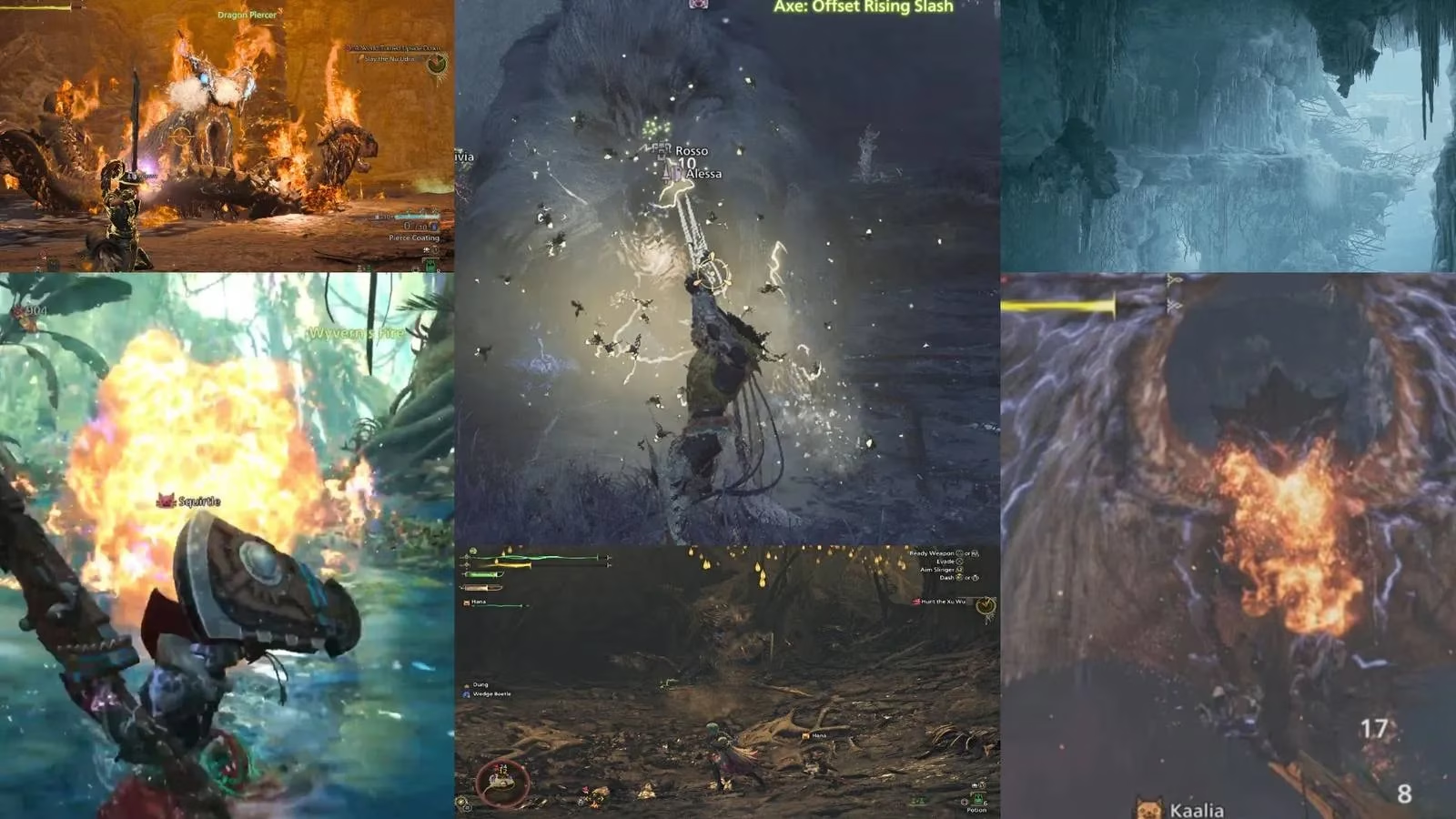
Here in 2026, the core mechanics remain unchanged, but the rhythm of hunts has shifted. Elemental damage isn’t a multiplier that sends numbers skyrocketing. Instead, it functions as a flat bonus—a steady, reliable undercurrent rather than a tidal wave. Think of it as pouring a vial of ink into a stream: the current adds color, but the stream’s fundamental flow stays the same. That’s why many veterans will whisper that if you don’t want to juggle loadouts, raw damage or a well-chosen status effect like Paralysis often feels more consistent. But for those who love the art of preparation, matching the right element to the right beast is a dance of efficiency that shortens those hunt timers in ways that raw power alone cannot.
The Thundering Front-Runner: Unmatched Versatility
If raw numbers were the only metric, Thunder would sit on the throne. Base-game analysis shows a staggering 13 monsters buckling under electric fury, covering everything from early-game Great Jagras to the soaring Legiana. It’s the most broadly applicable element, a swiss-army knife crackling with static. Fast weapons like Dual Blades or the Kinsect-laden Insect Glaive drink deeply from this well, turning every rapid slash into a mini-storm. Even in High Rank, where Title Update monsters like Mizutsune occasionally rewrite the weakness charts, Thunder remains the workhorse element that rarely feels like a wasted slot. It’s like the dependable roar of an engine that never stalls, even when you’re racing toward the endgame.
The Dragon’s Niche: A Key for the Late-Game Vault
While Thunder holds the crown for quantity, Dragon elemental damage is the skeleton key that unlocks the most grueling challenges. A total of 10 monsters in the base game show a Dragon weakness, but the crucial detail is where they reside. Elder Dragons, the tempered apexes, and the ominous constructs that define endgame Anomaly Investigations—these titans often share a Dragon chink in their armor. Crafting a Dragon element weapon early is like holding an antique key that only fits the mansion’s deepest, most forbidden doors. You won’t use it often on the street, but when that gatekeeper appears, you’re ready. The visual flair—a dark, swirling crimson aura—only adds to the sensation that you’re wielding something ancient and secretive.
The Chilling and the Scorching: Situational Powerhouses
Ice and Fire elements share a statistical dead heat, each targeting 10 monsters in the base roster. They are elemental twins orbiting opposite sides of the sun. Ice chews through sandy predators like Diablos and the magma-veiled Agnaktor with a hiss of steam; Fire turns the tables on icy wyverns and the plant-like Goss Harag. However, because the post-launch meta has increasingly leaned toward Thunder- and Dragon-weak monsters at the highest investigation levels, these two elements often end up as specialized tools you bring out when the hunt calls for it. They aren’t weak—far from it—but they sit in the back pocket while your main loadout hums with a different frequency. A hunter who fine-tunes a pure Ice set for an Odogaron hunt will feel the difference immediately, like swapping from hiking boots to ice skates the moment the terrain shifts.
The Underdog Element: Water’s Modest Reach
Water damage drew a rather short straw in Monster Hunter Wilds. Only 9 monsters in the original release tremble at a splash of water, making it the least generally useful element for blind progress. That doesn’t make it worthless; against the likes of Anjanath or the explosive Brachydios, a Water weapon becomes a scalpel precisely aligned with the wound. The issue is sheer frequency. Unless you’re specifically targeting a monster with that weakness, you’re often better off with a universally high raw-damage blade. Yet, with the introduction of new Title Update monsters—some of which bring fresh Water vulnerabilities—this element has inched up in relevance. Still, it remains the narrowest path, one best walked by hunters who already have a robust arsenal and are simply min-maxing every encounter.
Crafting a Smarter Armory in 2026
The trap many newcomers fall into is the myth of the “one true weapon.” Monster Hunter Wilds is not a game that punishes experimentation; it’s a game that rewards it with significantly reduced grind compared to its predecessors. A hunter in 2026, after years of quality-of-life patches, can realistically maintain two or three elemental weapons from each favored category without burning out. The most elegant approach is to let your monster knowledge dictate your preparation. See a Rathalos in the quest preview? Reach for the Ice or Dragon greatsword. Spot a Nargacuga? Thunder it is.
In the end, elemental damage isn’t a mandatory layer of complexity; it’s an invitation. It’s the game whispering, “I see you know the monster’s name. Now show me you know its secret.” For those who accept, the reward is a hunt that flows like a perfectly rehearsed symphony—every hit landing a beat earlier than expected, every flinch registering a note higher. Whether you favor the widespread crackle of Thunder or the targeted might of Dragon, the Forge awaits with ember-bright potential.
Data referenced from GamesIndustry.biz helps frame why Monster Hunter Wilds’ elemental “best choice” in 2026 often comes down to player time-budget and build friction rather than pure damage math: when endgame updates add monsters and adjust reward loops, hunters tend to consolidate around a few high-coverage options (like Thunder for broad matchup reach) while keeping niche counters (like Dragon) for the hardest quests where efficiency matters most.
Comments