
The Lazy Hunter’s Guide to Catching Every Fish in Monster Hunter Wilds
Perfect your Monster Hunter Wilds fishing side hustle: catch elusive species, find hidden spots, and master bait for a fully complete field guide.
There comes a time in every hunter’s career when the endless roar of gigantic beasts starts to feel like background noise and the only thing that sparks joy is the gentle plop of a bobber hitting the water. In Monster Hunter Wilds, fishing isn’t just a way to pass the time between quests—it’s a full-blown side hustle that can test your patience more than a tempered elder dragon. The game doesn’t shout about it from the rooftops, but tucked away in every lake, river, and soggy puddle hides a cast of aquatic critters just waiting to be reeled in, studied, and—if you’re a completionist—relentlessly pursued until your field guide is 100% complete.
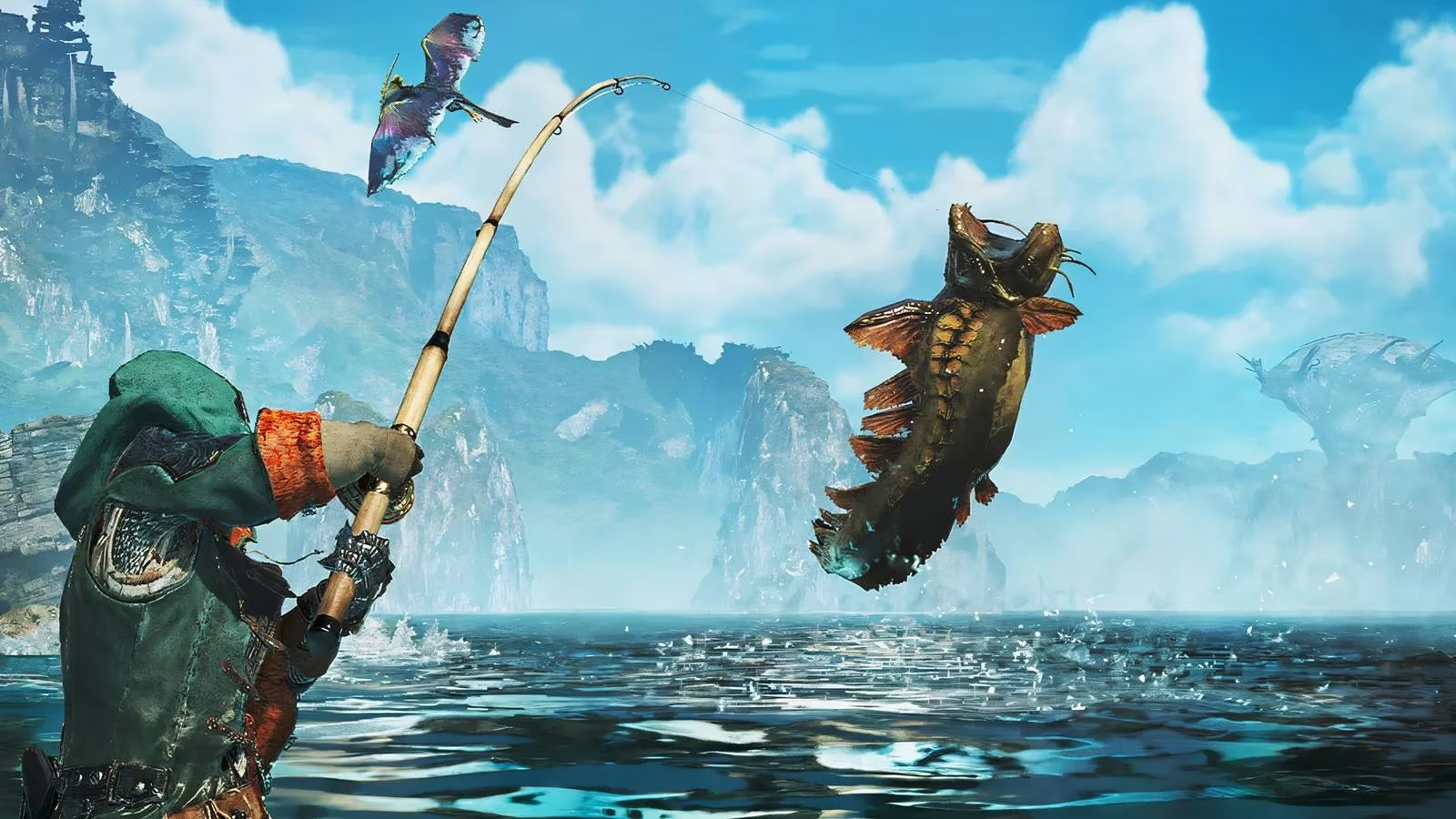
Let’s get one thing straight: you can’t just waltz up to every body of water with your Capture Net and expect to bag the lot. Sure, the net is a handy gadget for scooping up unsuspecting Vigorwasps or the occasional flashy beetle, but when it comes to fish with actual size and sass, you need the real McCoy—a fishing rod. The net simply won’t cut it for the whoppers, and that’s where the rod comes in clutch. So if you’re gunning for that shiny platinum trophy or just aiming to tick every side quest off your list, you’d better get comfortable with the cast-and-wait routine.
The basic rule of thumb is delightfully simple: if you see fins moving beneath the surface, you can cast a line there. Monster Hunter Wilds won’t hold your hand with glowing icons or minimap markers; you’ll have to keep your eyes peeled and trust your gut. Some of the best fishing spots look utterly unremarkable—a tiny pond in a forgotten corner of a map, a murky swamp that smells worse than a Gypceros’s lunch, or even a high-altitude alpine lake where the water is so clear you can practically count the scales on the fish below. The diversity of environments means that each region boasts its own exclusive species, and some of these gilled treasures only show up under very specific conditions.
Here’s a handy cheat sheet to keep your tackle box in order. Use it wisely, because a few of these finned friends are more elusive than a shiny Pokémon.
| Fishy Fellow | Best Region(s) | Prime Time | Bait Preference |
|---|---|---|---|
| Glimmering Bream | Windward Plains (Sunset Lake) | Dawn / Dusk | Any baitbug |
| Armored Catfish | Scarlet Forest (Deeproot Basin) | Nighttime | Heavyweight bait |
| Gastronome Tuna | Oilwell Basin (Slickstream River) | All day (rare) | Fast-moving lure |
| Royal Arowana | Iceshard Cliffs (Frostveil Pool) | Early morning | Golden baitbug |
| Sunscale Trout | Windward Plains (any stream) | Daytime | Standard bait |
| Ghost Coelacanth | Ancient Cave (World’s End Grotto) | Always, but only in deepest spots | Sinking bait |
Now, don’t go thinking you can just show up, drop a line, and wait for the dinner bell to ring. Some of these fish have attention spans shorter than a Kulu-Ya-Ku on a sugar rush. The Gastronome Tuna, for instance, will eyeball your lure for maybe a second before darting off to the other side of the river, leaving you wondering if you imagined the whole thing. Patience, young grasshopper, is the name of the game. If a fish spooks, you can often just wait a few moments and it’ll swim back, but some species (looking at you, Royal Arowana) will outright vanish for the rest of the day. That’s when you either reset the area by fast-traveling or take a deep breath and try again tomorrow in-game.
The real kicker is that Monster Hunter Wilds doesn’t just ask you to catch these slippery critters—it also expects you to document them. Researching endemic life is part of a hunter’s responsibility, and every fish you land adds a juicy entry to your field guide, complete with goofy flavor text and sometimes genuinely useful insights about their ecology. Plus, several NPCs in base camps offer side quests that require specific fish. Deliver a plump Sunscale Trout to a hungry chef and you might unlock a new meal; hand over a Ghost Coelacanth to the resident researcher and watch them geek out for a solid minute.
And for the trophy hunters out there, let’s not beat around the bush: you’ll need to catch every single type of aquatic life to pop that coveted achievement. No shortcuts, no cheese strategy—just you, your rod, and a whole lot of staring at water. It’s equal parts meditative and maddening, which honestly feels like the perfect side dish to the main course of monster smashing.
A few pro tips from someone who’s spent way too many hours in these waters: first, upgrade your fishing gear as soon as you can. The basic rod gets the job done, but a slightly better reel or stronger line can make the difference between a successful catch and a snapped leader. Second, pay attention to the weather. Some fish only appear when it’s raining or when a sandstorm clears, adding a layer of environmental puzzle-solving to your angling adventures. And third, never underestimate the power of bait. You’ll collect baitbugs from harvesting spots around the maps; hold onto them like they’re rare decorations because they can mean the difference between a bite and a cold, empty hook.
There’s something profoundly satisfying about taking a break from carving Rathalos tails to sit by a quiet stream and watch the pixelated sunset. Fishing in Monster Hunter Wilds is a palate cleanser, a gentle reminder that the New World isn’t all teeth and scales. So grab your rod, leave your Palico to nap on a rock, and see if you can become the ultimate angler. Just don’t be surprised when the simple act of catching a fish turns into a multi-hour obsession—that’s the Monster Hunter way.
Comments