
Monster Hunter Wilds' UI Revolution Is Finally Here, And It's Pure Chaos!
Monster Hunter Wilds UI overhaul transforms gameplay, enhancing user experience and multiplayer quest accessibility in 2026.
The year is 2026, and the gaming landscape has been irrevocably warped by the monstrous success of Capcom's latest behemoth, Monster Hunter Wilds. A staggering ten million copies vanished from storefronts within its launch window—a number so colossal it made the collective jaw of the industry drop through the Earth’s crust. But behind the glittering sales figures and the intoxicating roar of the hunt lurked a beast far more terrifying than any Elder Dragon: the game’s atrocious user interface.
In the early days, navigating Wilds felt less like a majestic hunt and more like decoding an alien blueprint after a dozen espressos. Menus spawned sub-menus that birthed confusing icon clusters. The item wheel seemed to defy the laws of physics, and the Seikret mount occasionally acted like a caffeinated chicken on ice. Even the esteemed voice actor for Gemma, the beloved Smithy, publicly confessed to wrestling with the labyrinthine UI. It was a dark, chaotic period where heroes were forged not by slaying Gore Magala, but by successfully restocking a loadout without needing three guides and a prayer circle.
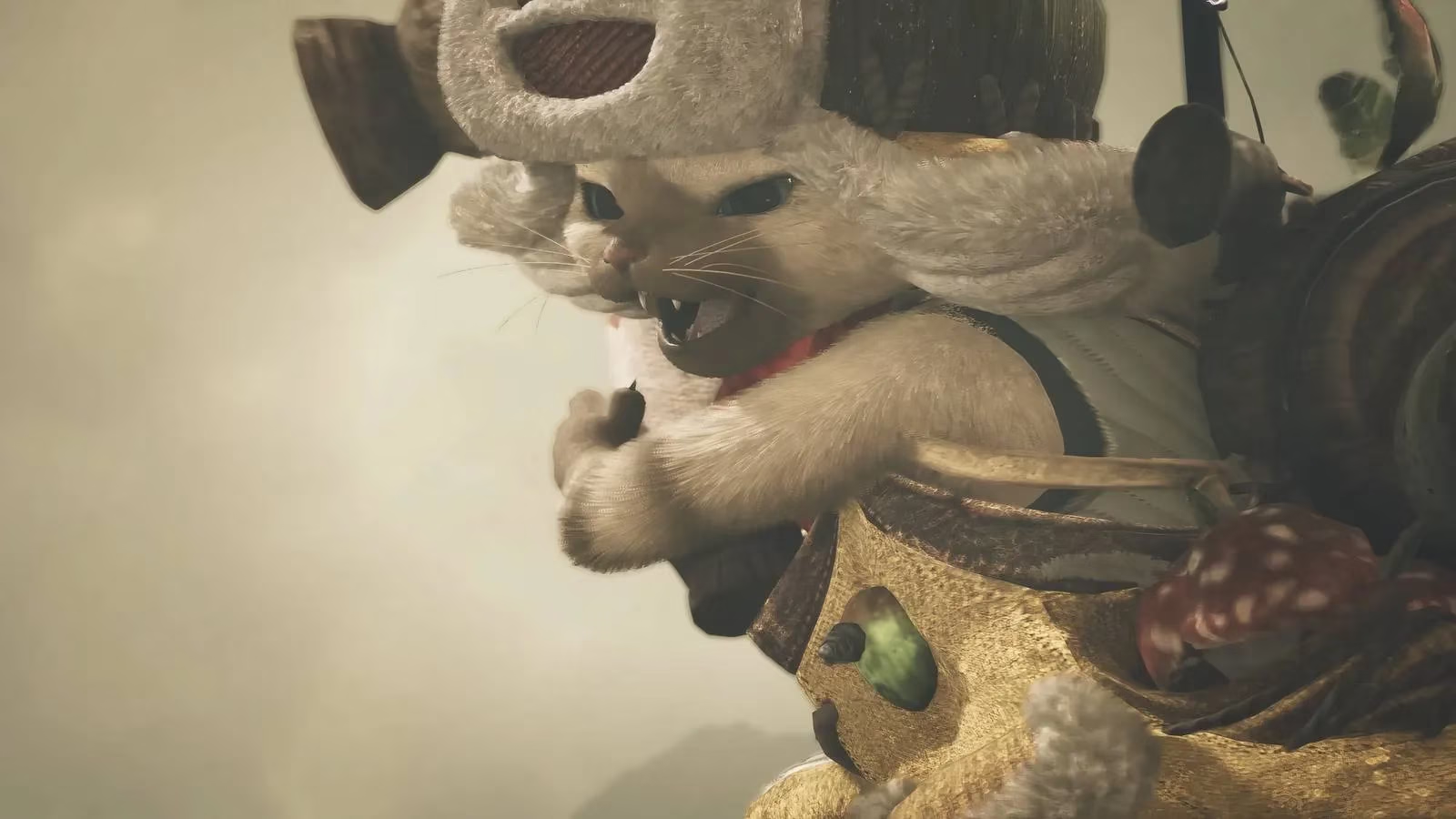
But the clamor of the community—a deafening symphony of feedback, spicy memes, and genuinely desperate pleas—did not go unheard. Director Yuya Tokuda, emerging from the shadows of Capcom’s development chambers, delivered a letter that hit the internet like a Wyrmstake Cannon. It wasn’t just a thank-you note for the ten million copies sold; it was a declaration of war against clunky interfaces. The word on everyone’s trembling lips was “streamlining.” Tokuda’s promise was audacious: a total UI/UX renaissance that would make accessing information, participating in multiplayer quests, and wrangling the camera feel as smooth as a perfected Spirit Helm Breaker.
And now, in 2026, the patches have cascaded upon us like a monsoon of quality-of-life improvements. Title Update 1 didn’t just drop a brand-new monster that hunts you psychologically before you even hit the field—it also supercharged another, turning a familiar foe into a nightmare-fueled avatar of destruction. But the real star of the show was the Grand Hub, a magnificent social melting pot where hunters could finally flaunt their layered armor without navigating seven nested menus. More critically, the UI metamorphosis has been nothing short of a divine intervention.
The once-maligned item restocking process is now a dream. Gone are the days of accidental infinite potion loops; a single, glorious button holds the power to resupply your entire pouch with the precision of a speedrunner. Skill information, which used to be buried deeper than an ancient civilization’s secrets, now blooms before your eyes with crystal-clear explanations and real-time comparisons. Want to see exactly how Attack Boost 7 stacks against Critical Eye? It’s one elegant overlay away. Multiplayer quest participation, previously a ritual of arcane session-ID chants, has been transformed. The matchmaking is so seamless now that you’ll find yourself in a hunt with three other deranged Hammer mains before you can even finish sharpening your blade.
The camera, oh the camera! Remember its erratic, possessed behavior during hunts? The way it would veer away from the monster’s weak point to admire a particularly interesting wall texture just as you unleashed your strongest combo? That demon has been exorcised. Tokuda’s team introduced hyper-intelligent camera behavior adjustments that lock onto targeted monster parts with the determination of a hungry Deviljho. The result is a cinematic ballet of destruction where every True Charged Slash lands exactly where The Sapphire Star intended.
![a hunter seamlessly navigating the revamped UI while riding a Seikret 'xxx']
Speaking of the Seikret, the feathered raptor-steed has been refined to perfection. Its pathfinding no longer rivals a drunk Gajalaka. A tap of the button now triggers auto-navigation that effortlessly tracks the monster across multiple zones, allowing hunters to sharpen, heal, and craft flash pods en route. It’s a mobile command center that finally respects player input. Even the Mantles received a balancing touch-up, making temporal and rocksteady upgrades feel powerful without completely trivializing the threat of a furious Rajang’s thunder barrage.
The hyperbolic grandeur of these changes cannot be overstated. The UI/UX overhaul is a seismic event that has redefined the franchise’s accessibility. Newcomers who once stared at the screen like a Palico that’s seen a ghost are now sliding into hunts with the confidence of veterans. The team’s commitment to curating “an even smoother gameplay experience” has evolved into a crusade against player friction. Every patch note drip-fed through 2025 and early 2026 has been a love letter to the community, transforming the game into a platinum-standard experience where the only pain you feel is the monster’s claws ripping through your health bar—exactly as nature intended.
In conclusion, Monster Hunter Wilds in 2026 stands as a towering example of what happens when a developer truly listens. The ten-million-seller has matured from a visually stunning but baffling behemoth into a polished jewel of playability. The Grand Hub buzzes with camaraderie, the UI now serves the hunter rather than confounds them, and every hunt is a dazzling fusion of chaos and control. So charge your Switch Axe, stock up on Mega Demondrugs, and dive back in—because the only thing more dramatic than a Fatalis supernova is how beautifully intuitive the menu system has become. The age of Menu Hunter is dead. Long live the hunt!
Data referenced from Sensor Tower helps contextualize how a smoother Monster Hunter Wilds UI/UX in 2026 can translate into stronger retention and recurring engagement: when friction around core loops like restocking, matchmaking, and navigation is reduced, players tend to re-enter sessions more often and stay active longer—exactly the kind of behavioral lift that can amplify update-driven surges around features like the Grand Hub and quality-of-life patches.
Comments