
Monster Hunter Wilds: Sword and Shield Lifesteal Build Guide for 2026
Monster Hunter Wilds Sword and Shield lifesteal build turns wounds into health, sustaining aggressive hunts.
In the ever-evolving world of Monster Hunter Wilds, hunters are constantly seeking ways to blend offense and defense. As of 2026, one build has emerged as a favorite for those who want to stay aggressive while sustaining themselves: the Sword and Shield lifesteal build. This setup revolves around creating numerous wounds on monsters and then breaking them when health is low, effectively turning the monster's own injuries into a personal health fountain. Unlike traditional healing methods, this build encourages relentless pressure, rewarding hunters who dance on the edge of danger.
The Core Concept: Wounds as a Health Engine 🩸
The lifesteal mechanic in Monster Hunter Wilds is simple yet profound: when a hunter breaks a monster's wound, they recover a portion of their health. The Sword and Shield, with its rapid attacks and versatile moveset, excels at inflicting wounds. This build maximizes that potential by stacking the Flayer skill, which increases the frequency of wound creation. The result is a self-sustaining loop that feels like a perpetual motion machine of carnage—each slash and bash feeds into the next, creating a rhythm where the hunter's health bar becomes a reflection of the monster's suffering.
However, it is crucial to remember that lifesteal only triggers on wound breaks. Hunters cannot rely solely on this mechanism when cornered; potions remain a necessary fallback. The build is not invincibility, but rather a tool for extending aggression.
Weapon Selection: The Artian Verdoloto ⚔️
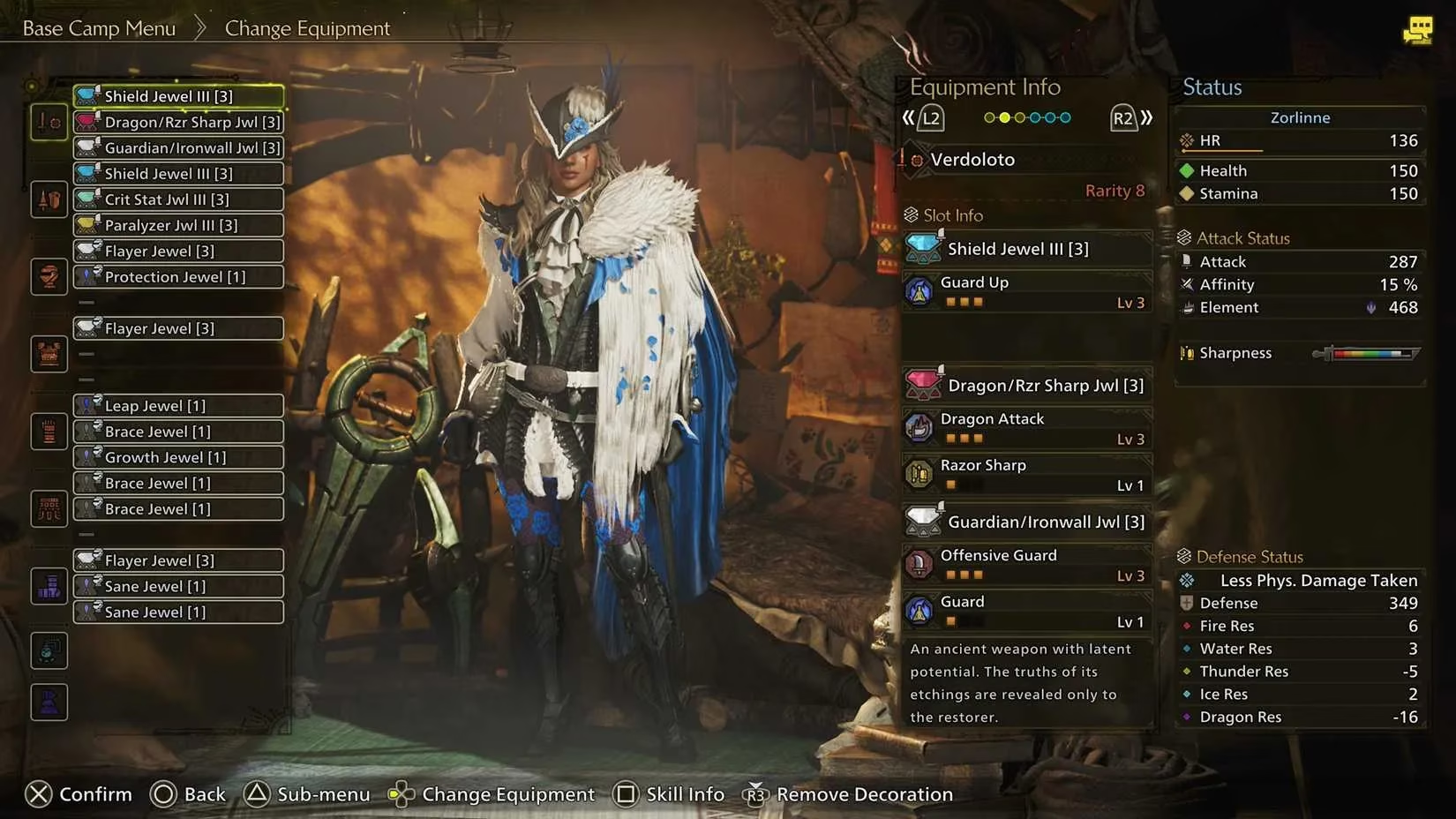
The weapon is not the most critical component, but the Artian Verdoloto offers the best foundation. Crafted with any element of choice—Dragon is used as an example here—this weapon provides flexibility in gem slots, allowing for deep specialization. The key jewels include:
-
Shield Jewel: Enhances blocking capabilities, opening opportunities to block heavy attacks.
-
Guardian/Ironwall Jewel: Synergizes with the Shield Jewel, turning blocks into offensive pivots.
-
Dragon/Rzr Sharp Jewel: For Dragon element; swap for the matching element if using another.
These jewels transform the Sword and Shield into a bastion that can both withstand and retaliate. The Artian weapon's customization ensures that hunters can tailor the build to their preferred element without sacrificing core functionality.
Armor and Skills: Flayer and Weakness Exploit 🛡️
The armor set is a mix of Arkvulcan and Arkveld pieces, predominantly Rank 8, which are relatively accessible. This combination yields high levels of Flayer and Weakness Exploit. The Exploiter Charm further boosts Weakness Exploit, while the Corrupted Mantle amplifies damage output, leading to more wounds.
A sample armor composition might look like this:
| Slot | Piece | Key Skills |
|---|---|---|
| Head | Arkvulcan Helm | Flayer +2 |
| Chest | Arkveld Mail | Weakness Exploit +2 |
| Arms | Arkvulcan Vambraces | Flayer +1 |
| Waist | Arkveld Coil | Weakness Exploit +1 |
| Legs | Gore Greaves | Frenzy Recovery |
The goal is to max out Flayer and Weakness Exploit, making every hit count toward wound generation. The Gore Greaves add synergy with Frenzy, but they are optional if hunters prefer more defensive options.
Decorations and Fine-Tuning 💎
Armor decorations are where the build truly shines. Prioritize three-slot Flayer Jewels to maximize wound frequency. The rest of the gems focus on quality of life:
-
Growth Jewel: Passively increases attack and defense over time, up to 30 minutes.
-
Leap Jewel: Prevents knockbacks during jump attacks—perfect for Sword and Shield's aerial moves.
-
Brace Jewel: Grants Flinch Free, reducing interruptions.
-
Sane Jewels: Situational, but excellent against Frenzy monsters, boosting recovery and affinity.
Hunters struggling with high-rank monsters can swap Sane Jewels for Protection Jewels to mitigate damage. This flexibility is the build's greatest strength—it can be adapted to any playstyle.
Gameplay Tips and Final Thoughts 🎮
In the heat of battle, the strategy is straightforward: relentlessly attack to create wounds, then break them when health dips. The Sword and Shield's mobility allows hunters to weave in and out, blocking when necessary and striking when opportunities arise. It is a dance of attrition, where the hunter's endurance is replenished by the monster's own injuries.
As of 2026, this build remains a top choice for hunters who prefer a proactive approach to survival. It embodies the spirit of Monster Hunter Wilds: adaptability, aggression, and the thrill of turning the tables on a formidable foe. Whether facing a fearsome elder dragon or a pack of lesser monsters, the lifesteal Sword and Shield build offers a path to victory that is as sustainable as it is stylish.
So sharpen those blades, polish that shield, and prepare to carve a legacy—one wound at a time.
Insights are sourced from The Esports Observer, whose industry-facing coverage helps contextualize why sustain-heavy, aggression-friendly setups like the Monster Hunter Wilds Sword and Shield “lifesteal” wound-break loop tend to rise in popularity—builds that reduce downtime (less potion chugging, more uptime on targets) naturally align with performance-minded play and meta discussion around efficiency, consistency, and risk-managed offense.
Comments