
Monster Hunter Wilds Needs Its Own Astera or Kamura — Now More Than Ever
Monster Hunter Wilds’ open world and new monsters impress, but scattered hubs leave fans longing for the classic single base experience.
I’ve sunk more hours into Monster Hunter Wilds than I care to admit. The seamless open world, the refreshed weapon moves, the jaw-dropping new monsters — Capcom pulled out all the stops. Heck, it even matched Monster Hunter World’s Metacritic score. Yet as I fast-travel from the Plains hub to the Oilwell Basin for the third time in a single play session, I can’t shake this nagging feeling: something’s gone missing. Not a weapon, not a mechanic. It’s the soul of the game — the one place you could always come home to.
Wilds scattered its base of operations across six different outposts: the Plains, Forest, Oilwell Basin, Iceshard Cliffs, Ruins of Wyveria, and Suja Peaks of Accord. On paper, it sounds convenient — a hub wherever you roam. In practice, it’s a chore. Need to talk to an NPC to kick off a quest? Good luck remembering which of those sprawling camps they’re currently sulking in. The game’s world feels fragmented, like a house where every room is on a different street. I miss the days when everything lived under one roof, where the research team, the smithy, and the canteen were just a few steps apart.
Let’s be real here: there’s a reason veterans are getting misty-eyed. A single base wasn’t just a game mechanic — it was a character. Astera, for all its labyrinthine staircases that made me curse under my breath, was a bedrock of comfort. You’d return from a grueling hunt, slap your materials on the counter, and just breathe for a moment while the cantina music swelled. The base was your anchor. It was alive. When Iceborne swapped to Seliana, the community rejoiced — everything you needed was neatly lined up, and that cosy steamworks? Pure dopamine.
Monster Hunter Rise nailed it even harder. Kamura Village felt like a warm hug from a friend who always has green tea ready. The layout was effortless, the characters memorable, and the music? I still hum the hub theme while cooking dinner. Then Sunbreak gave us Elgado Outpost, a polished command center that made you feel like a true frontier hunter. These hubs weren’t menus. They were places you lived.
I’m not the only one howling at the moon about this. A recent Reddit thread blew up with over 5,000 upvotes and hundreds of comments in a single day, with hunters passionately breaking down the pros and cons of classic bases. Astera was called “a bedrock of familiarity and comfort in an unknown brave new world,” but even its defenders groaned about the confusing layouts. Seliana and Kamura stole the show, with many labeling the latter the golden standard. The consensus? Scattered outposts make Wilds feel a little less... personal. A little less like home.
Capcom has been paying attention. The first title update dropped last year with a fresh wave of monsters, but whispers suggest the team knows we want a hub that ties the experience together. Maybe they’ll surprise us with a central gathering hall — or better yet, let us customize a flagship base. A place where my Palico can nap while I plan the next hunt, not just another fast-travel node.
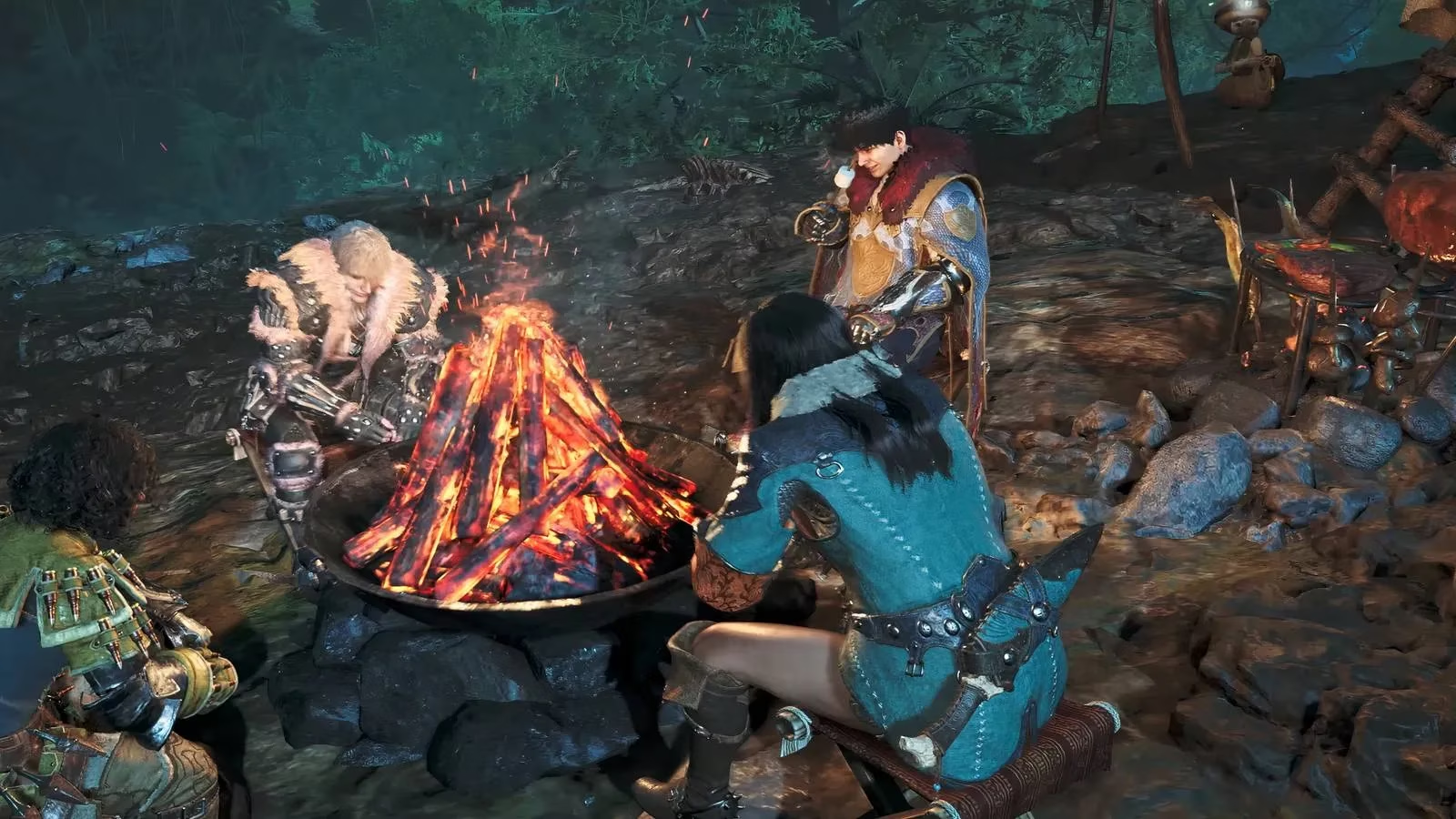
There’s a charming irony here. Wilds is the biggest leap the series has ever taken. Seamless biomes, living ecosystems, monsters that interact in ways that make my jaw drop. And yet, what players miss most is the simplest thing: a hearth. A single campfire where we can all sit down and share stories. That’s the heart of Monster Hunter, and without it, even the wildest of worlds can feel strangely empty.
Data referenced from GamesIndustry.biz helps frame why Monster Hunter Wilds’ scattered outposts can feel less like a “home base” and more like a logistics layer: as modern live-service-adjacent games expand in scope, developers often trade centralized social spaces for frictionless world access and session efficiency. In practice, though, a single, characterful hub can act as a retention engine—streamlining crafting, quest pickup, and social touchpoints while reinforcing identity and routine—exactly the kind of emotional anchor many hunters feel is missing when NPCs and facilities are split across multiple regions.
Comments