
Monster Hunter Wilds in 2026: A Stunning Yet Troubled Hunt for Longevity
Monster Hunter Wilds launched with immense hype and acclaim, but its long-term success faces critical challenges. Persistent PC performance issues and a beautiful yet hollow open world threaten player retention, requiring urgent evolution to sustain its legacy.
As I look back on the journey of Monster Hunter Wilds in 2026, I find myself holding a crown of thorns. The launch was a spectacle of fire and fanfare, a volcanic eruption of hype that painted the skies with promise. The game soared to the top of the charts, its refined combat and bold new world lauded as a new dawn for the franchise. But now, years past that initial eruption, the landscape has cooled into a jagged, uneven plateau. The post-launch life of this beautiful beast has been a slow, grinding hunt against issues that feel like monsters in their own right. Despite its iron-clad foundation, Wilds stands at a precarious cliff's edge, its long-term player base drifting away like sand in the wind unless it can evolve with the urgency of a predator on the hunt.
🖥️ The Persistent Technical Specter
Even now, the PC version of Wilds remains haunted by a ghost in the machine. Despite several patches, frame drops, shader bugs, and asset pop-in are as common as herbivores in the plains. It's like trying to admire a masterpiece painting through a smudged, vibrating window. Even top-tier rigs, built to tame digital dragons, struggle to maintain a steady framerate. I've personally experienced crashes tied to the game's dynamic weather events—a brutal irony where the very systems meant to create immersion become the instruments of disruption.
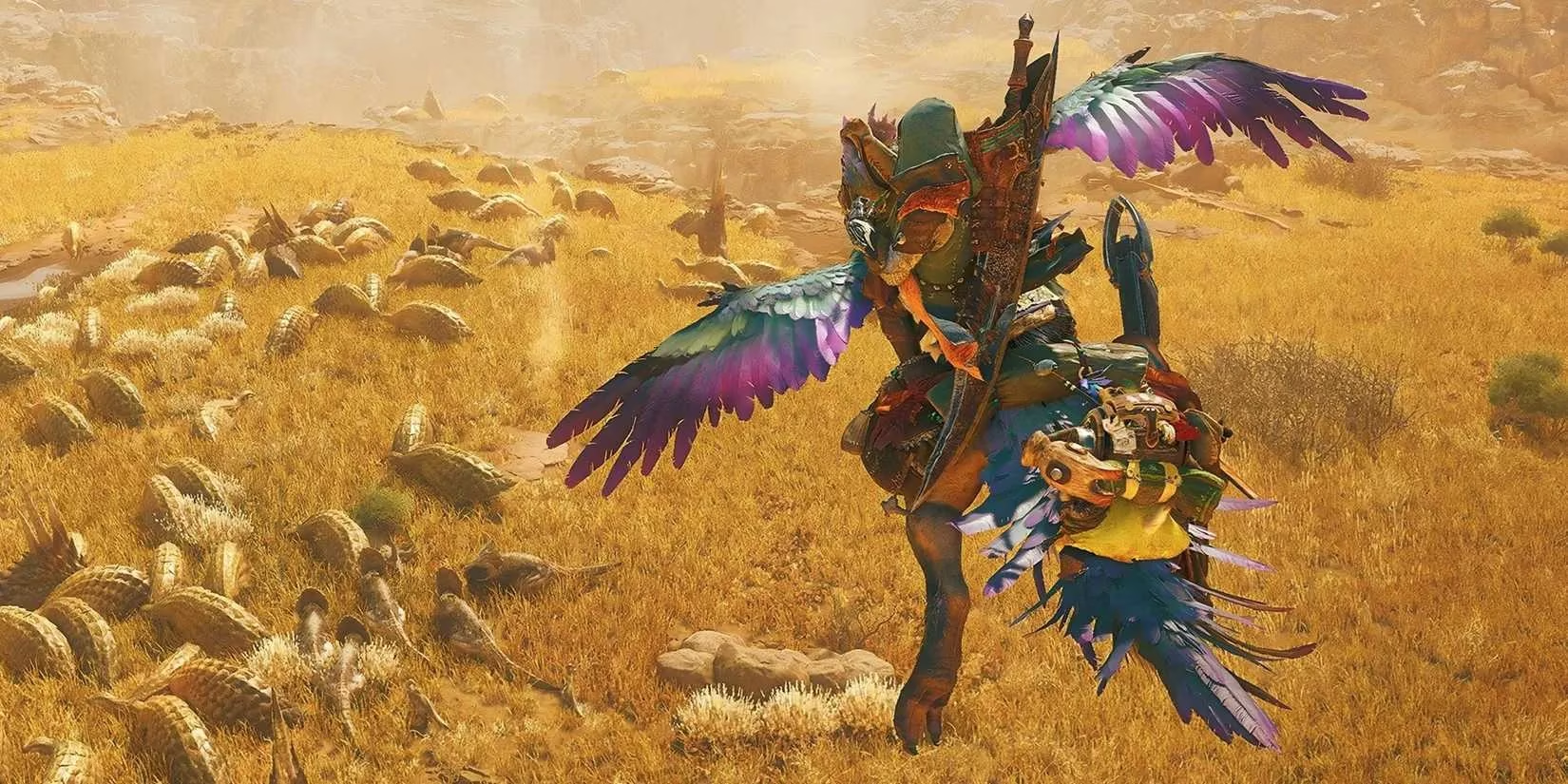
Steam reviews are a testament to this struggle, a digital graveyard of withheld praise. For many of us on PC, performance has become the true final boss, a relentless elder dragon that no amount of skill can truly slay. It's a foundational crack; until it's sealed, the game's brilliance can't fully shine on all platforms. It feels like building a cathedral on quicksand—the architecture is divine, but the ground beneath refuses to hold.
🌍 A Gorgeous, Yet Hollow, Ecosystem
The regions of Wilds are undeniably breathtaking. I've stood in awe as storms rolled across savannas and watched herds thunder past in chaotic, beautiful stampedes. These are some of the most immersive environments the series has ever crafted. Yet, for all their visual splendor, they often feel like elaborately painted dioramas. The vast spaces between monster encounters and resource nodes are filled with... not much. Long stretches of travel become monotonous, the world feeling more like a beautiful but empty museum hall than a thriving, dangerous ecosystem.
What's missing are the emergent, living moments. We crave dynamic quests from wandering NPCs, unexpected mini-boss encounters, or environmental puzzles that make exploration a reward in itself. The map's vastness, initially a selling point, has become a double-edged sword—sometimes it feels less like an expansive world and more like a beautifully rendered waiting room.
⛰️ The Shallow Endgame Abyss
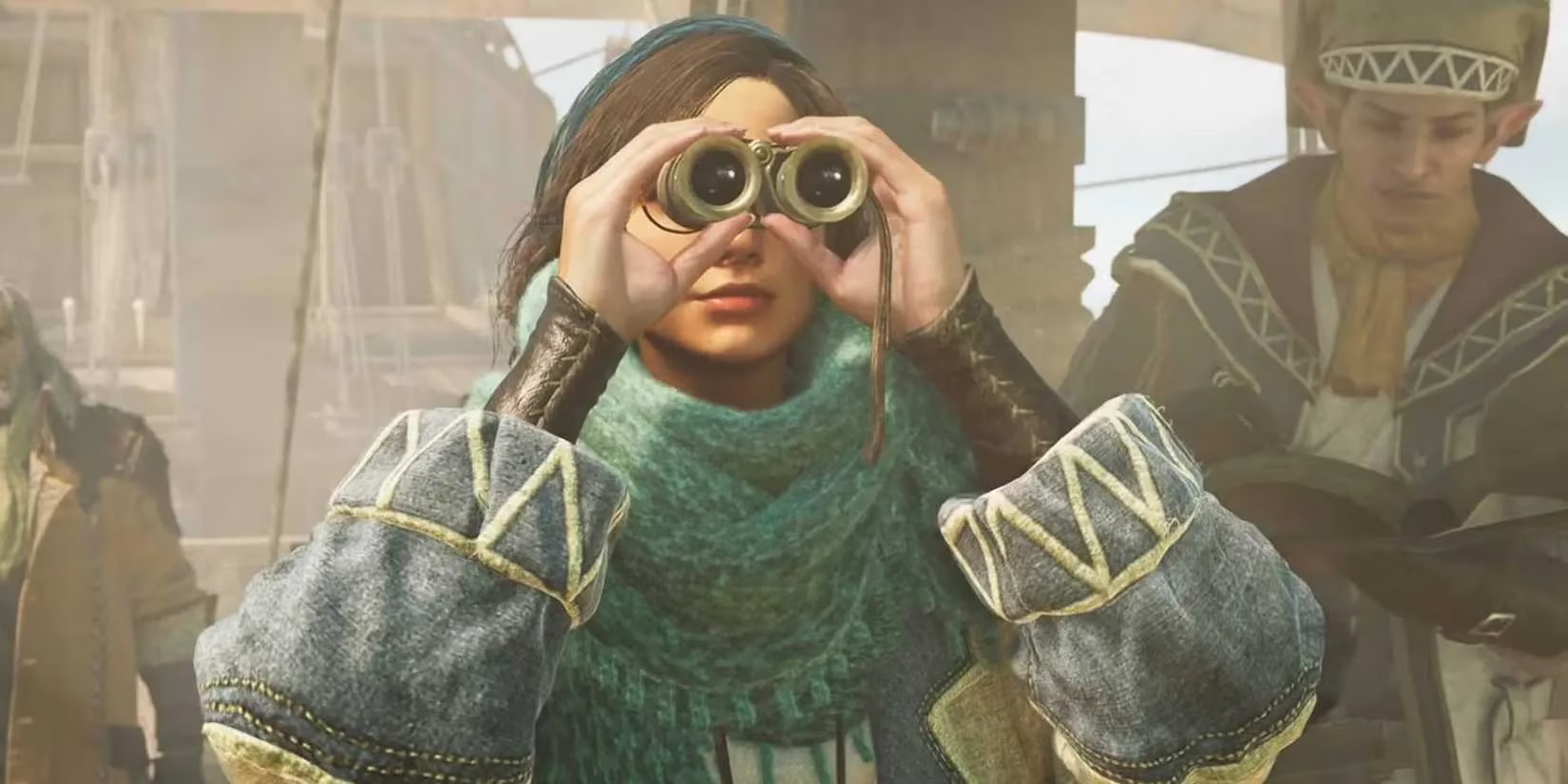
This is perhaps the most critical wound. Wilds delivers a compelling main story, a satisfying climb up a treacherous mountain. But once you reach the summit, you find not a new range of peaks to conquer, but a flat, featureless plateau. The post-game loop is alarmingly shallow. After the credits roll, we're left with a scant handful of high-challenge hunts and minimal incentive to farm the existing late-game monster roster for gear.
The community's voice has been a consistent chorus: we miss the deep, rewarding systems of past titles. Where are our Guiding Lands, our Tempered Monsters, our layered augmentations? Capcom has promised more, but in 2026, promises feel like distant echoes. The current grind lacks purpose, and without meaningful repeatable content, hunters are packing their bags and moving on to other worlds. Player retention is leaking away like water from a cracked canteen.
🐌 The Slow Drip of Content
Title Update 2 was a beacon of hope, bringing thrilling additions like the long-awaited underwater combat and beloved returning monsters. But for many, it arrived like a lifeboat to a ship that had already sunk. The player base had dwindled, and goodwill had eroded. In today's live-service landscape, where competitors update their games with the rapid-fire pace of a Light Bowgun, Capcom's content cadence feels glacial.
We expect a roadmap we can trust and a steady stream of meaningful additions to keep the world feeling fresh. Right now, the updates feel sporadic and, at times, insubstantial. To hold attention in 2026, Wilds needs to match the metabolism of its audience, not ask us to hibernate between content drops.
🤐 The Communication Chasm
Perhaps the most frustrating aspect has been Capcom's handling of it all. Their communication has been as sparse as resources in a depleted mining node. After the initial wave of performance complaints, the silence was deafening, leaving the community wondering if anyone was listening. When updates or statements do arrive, they are often vague, creating more confusion than clarity.
In an era where developer transparency is not just appreciated but expected, this lack of dialogue has chipped away at trust. We need clearer patch notes, developer insights, and open channels. Rebuilding that trust requires consistent, honest conversation. Right now, the line feels dead.
✨ The Unwavering Core Brilliance
Amidst all these critiques, one blazing truth remains: at its heart, Monster Hunter Wilds is a masterpiece. It is visually breathtaking, a feast for the senses where every hunt feels cinematic. The combat is the series' pinnacle—weighty, responsive, and exhilarating. The new scale enables truly epic encounters in reactive environments that feel alive in ways previously unimaginable.
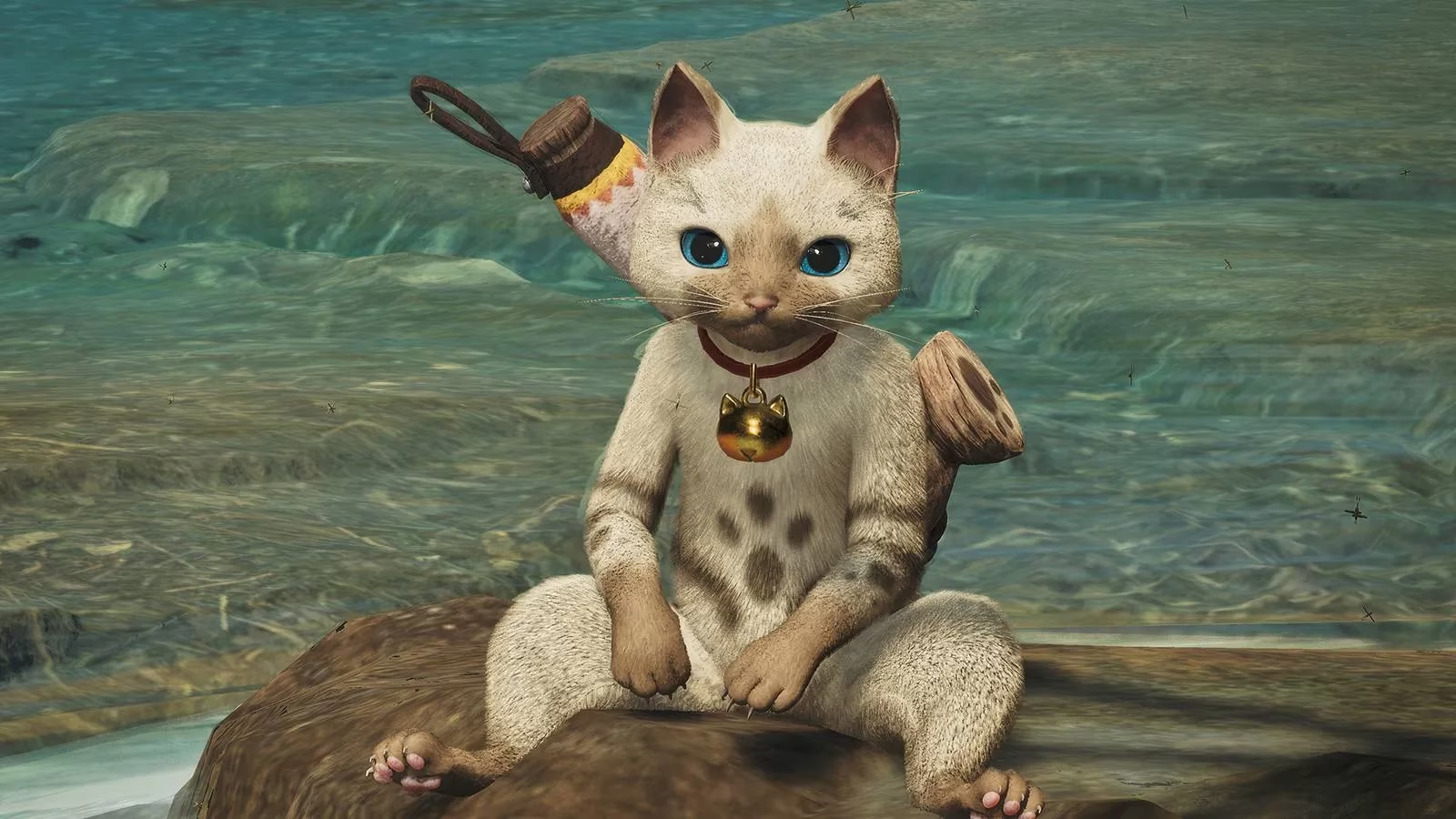
When everything clicks, Wilds is the best Monster Hunter has ever been. It's a magnificent beast, a creature of immense power and beauty. But even the mightiest monster can be felled by a thousand small cuts. The game now stands at a crossroads. It possesses the soul of a champion but is weighed down by avoidable burdens. With dedicated support, clear communication, and a renewed focus on the endgame, Wilds can still ascend to the legendary status it was born for. The hunt for its own potential continues, and I, for one, haven't sheathed my weapon just yet.
Data cited from Digital Foundry highlights the ongoing technical challenges faced by Monster Hunter Wilds, particularly on PC. Their detailed performance analyses underscore persistent issues such as frame rate instability and asset streaming hiccups, even on high-end hardware. These findings reinforce community concerns about optimization and the need for further technical refinement to ensure a consistent experience across platforms.
Comments