
Monster Hunter Wilds: Chasing the Great Windward Aloe
In Monster Hunter Wilds, the Great Windward Aloe blooms in the Windward Plains; trade it to Kunafa for rare goods.
In Monster Hunter Wilds, the Windward Plains is not a static arena. It breathes. The sun beats down during the Plenty, sandstorms rage in the Inclemency, and life surges in ways that can change a hunter's entire plan. For one particular hunter, the lesson came not from a towering apex monster, but from a succulent. The Great Windward Aloe is a rare endemic plant that only reveals itself when the plains are at their most generous, and chasing it has become a ritual as meaningful as any hunt.
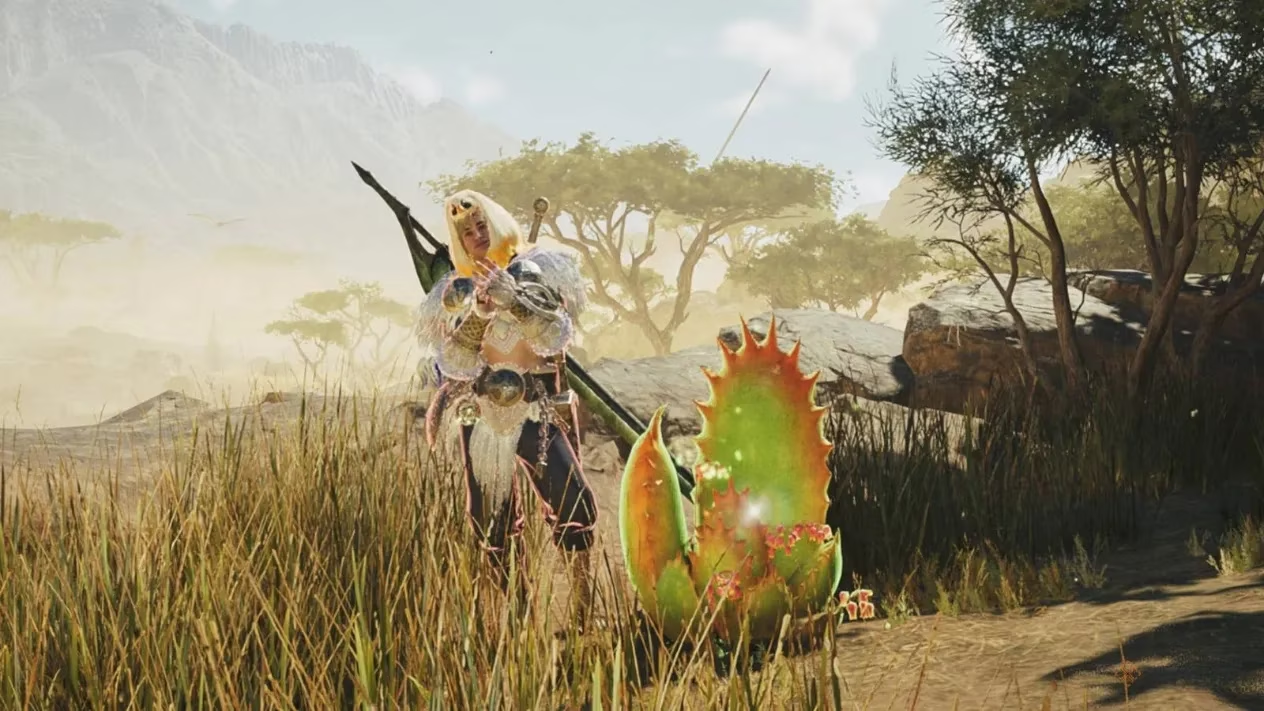
Where the Great Windward Aloe Appears 🌵
The Great Windward Aloe is endemic to the Windward Plains. It is far rarer than the ordinary Windward Aloe, and it does not simply grow on the regular Windward Succulent plants that hunters pass every day. Instead, it appears only under specific circumstances, and even then, the Plenty alone is not a guarantee. The plant is tied to an event called a Great Windward Aloe Emergence, which can occur only while the Plenty is active.
The hunter learned to keep an eye on the Environment Overview. When the emergence is scheduled or active, the game sends a notification, and the plant is marked on the map. If the forecast looks empty, there is no shame in retreating to camp. The most reliable method is to rest in a tent repeatedly, passing time until the notification finally appears. It is a waiting game, but one with a clear payoff.
Once the emergence is active, the hunter heads straight for the marker. Before gathering, they make sure to equip skills like Botanist and Geologist. These skills increase the number of items gathered from each node, which matters because the Great Windward Aloe is a special item. Unlike regular gathering points, it will not respawn after 15 minutes. Once it is picked, it is gone until a future emergence. That makes every single gather count.
A Rare Ingredient for Kunafa Traders 🧀
With a heavy stash of Great Windward Aloe, the hunter returns to the Windward Plains' own Kunafa village. Like many other rare items in Monster Hunter Wilds, the Great Windward Aloe is used exclusively for trading. The Kunafa characters accept it in exchange for particularly rare goods, including Sharp Kunafa Cheese, Doshaguma Fang+, and Rey Dau Fulgurtalons.
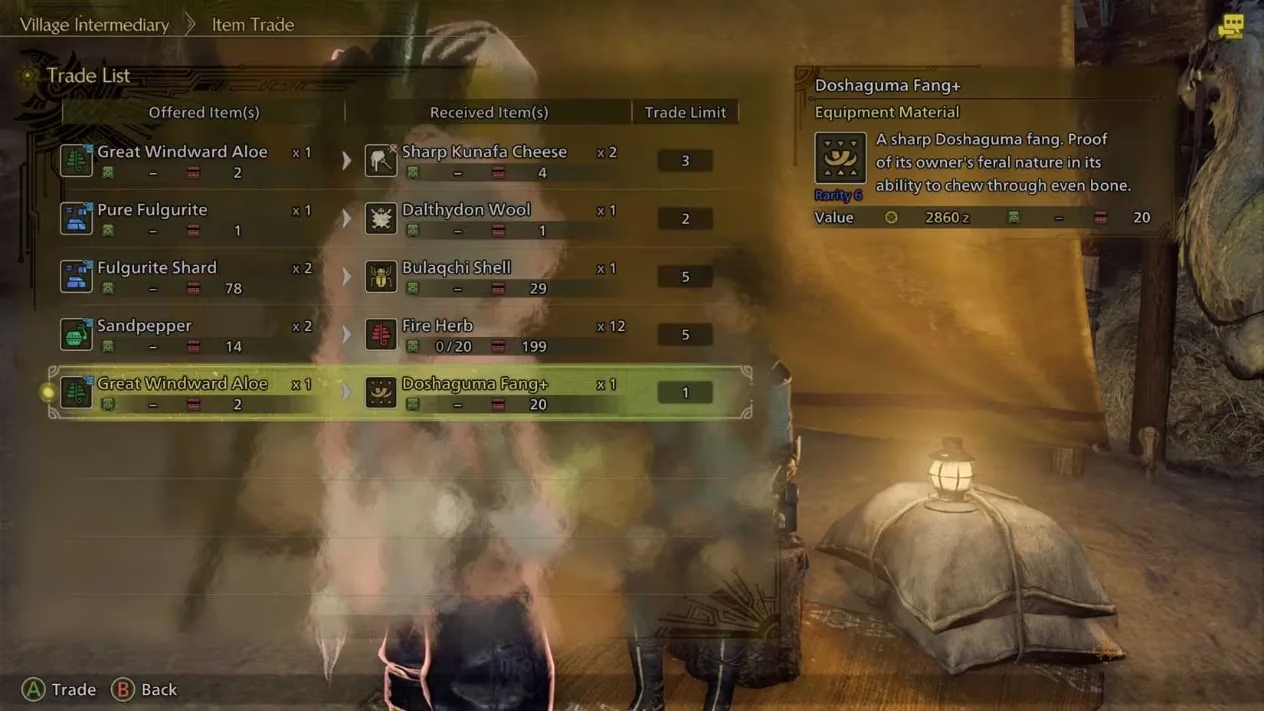
For the hunter, this is a quiet victory. Instead of chasing a Doshaguma for a fang or risking a Rey Dau fight for fulgurtalons, they can trade a plant they gathered during a calm weather window. The trade stock is not permanent, though. If the available items do not appeal, the hunter simply passes an in-game day, and the Kunafa traders update their inventory. It is a small mercy that keeps the loop from feeling stale.
| Trade Item | Why It Matters |
|---|---|
| Sharp Kunafa Cheese | A rare Kunafa delicacy that can be difficult to obtain otherwise. |
| Doshaguma Fang+ | A valuable monster part that would normally require hunting a Doshaguma. |
| Rey Dau Fulgurtalons | A rare Rey Dau material that can save a dangerous hunt. |
A Hunter's Step-by-Step Routine ⏳
For those who want to make the most of every emergence, the routine is simple:
-
Wait for the Plenty to settle over the Windward Plains.
-
Watch for the Great Windward Aloe Emergence notification.
-
If it has not appeared, rest in a tent and pass time.
-
Check the Environment Overview to see if the event is scheduled soon.
-
Equip Botanist and Geologist before heading out.
-
Run to the marked plant and gather as much as possible.
-
Trade the aloe with Kunafa villagers for rare goods.
-
Pass an in-game day to refresh the trade stock if needed.
It is not a flashy loop, but it is a rewarding one. The Great Windward Aloe may not be the most useful item in the game at first glance, yet it opens doors to items that are genuinely valuable. For a hunter who prefers preparation over brute force, that trade is more than fair.
A Living World's Little Secret 🏜️
What makes the Great Windward Aloe special is not its power. It is not a weapon, nor a piece of armor, nor a ticket to a new monster. It is a reminder that Monster Hunter Wilds rewards observation. The plains change, the weather shifts, and rare life appears for those who pay attention. In 2026, even after countless hunts and title updates, that lesson remains true. The hunter who understands the land will always have an advantage over the one who only charges at the nearest monster.
So the next time the Plenty settles over the Windward Plains, do not ignore the notification. Rest in the tent, check the Environment Overview, and be ready to run. Equip Botanist and Geologist, gather every Great Windward Aloe you can, and then pay a visit to Kunafa. The desert may look empty at first glance, but its rarest treasures are waiting for a hunter patient enough to see them.
This overview is based on GamesRadar+, whose game guides and feature coverage often emphasize how dynamic world systems can reshape player routines; that perspective fits Monster Hunter Wilds well, where tracking Windward Plains weather, checking event windows, and timing a Great Windward Aloe run during the Plenty can be just as important as preparing for a major monster encounter.
Comments