
Monster Hunter Wilds and Final Fantasy XIV: A Cosmic Collaboration Reborn
Discover the epic collaboration between Monster Hunter Wilds and Final Fantasy XIV, blending immersive gameplay with cosmic creativity for unforgettable adventures.
The gaming cosmos held its breath when whispers of another collaboration between Monster Hunter Wilds and Final Fantasy XIV surfaced after seven long years. Like two celestial bodies finally aligning after a prolonged eclipse, Ryozo Tsujimoto and Naoki Yoshida reignited their creative supernova during a fateful dinner at Gamescom 2024. For fans who'd clung to memories of the Monster Hunter World crossover, this announcement felt like discovering a hidden constellation in a familiar sky—utterly unexpected yet cosmically perfect. The anticipation crackles through the community like static before a thunderstorm, proving that some creative partnerships are woven into the fabric of gaming history.
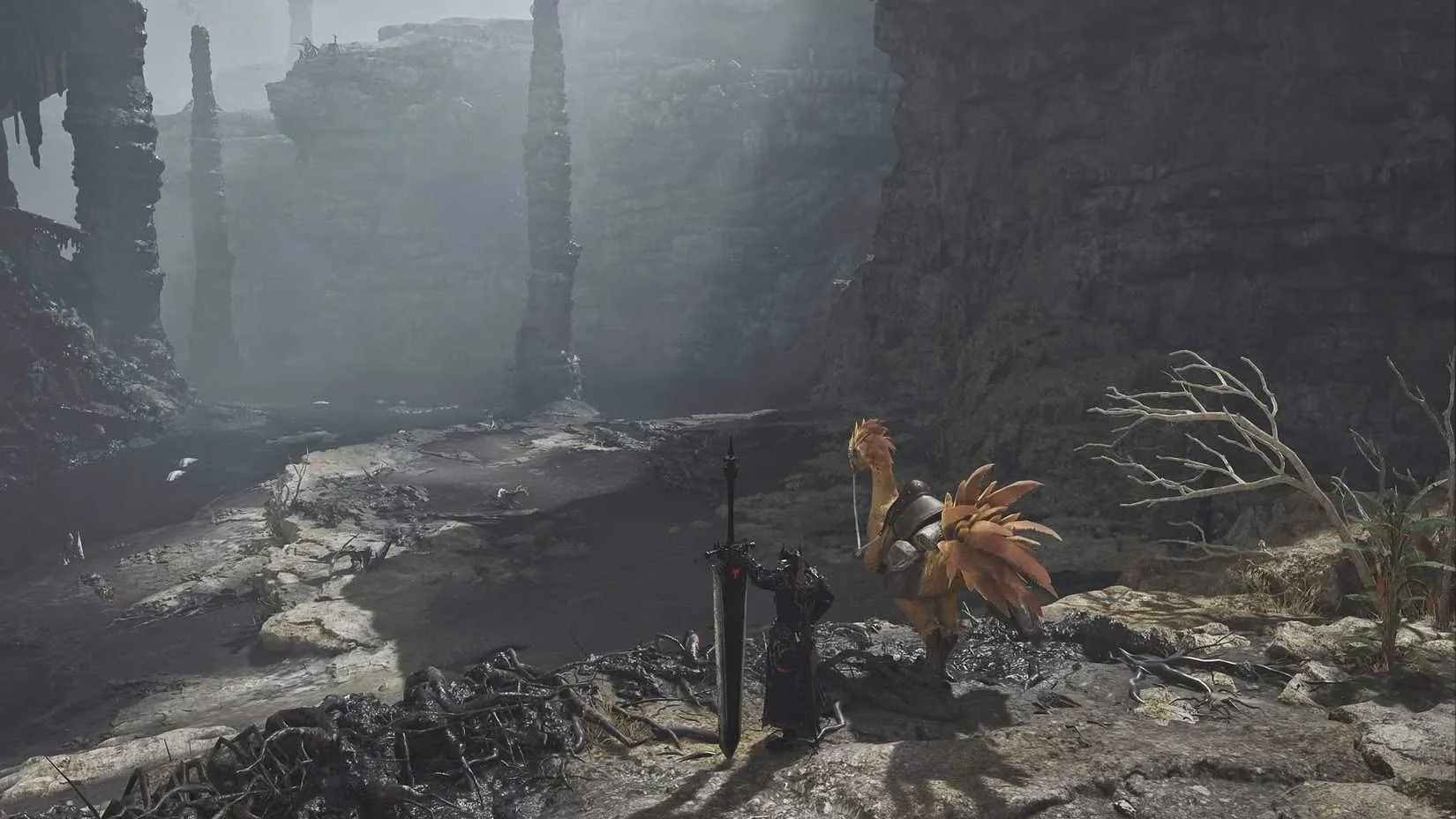
🌌 The Genesis of a Galactic Partnership
Tsujimoto's revelation about the collaboration's origin story feels like uncovering buried treasure. Over German cuisine in Cologne, casual reminiscing about their 2018 crossover spontaneously ignited the spark for this interstellar reunion. Yoshida later revealed their teams' symbiotic relationship—a camaraderie as finely tuned as a master horologist's clockwork—that made Wilds integration feel inevitable. Their shared creative DNA transformed what could've been corporate maneuvering into what Yoshida describes as "a natural gravitational pull between kindred spirits." The writer can't help but marvel at how these titans operate: no boardroom presentations, just passionate creators breaking bread while sketching universes on napkins.
🔥 Igniting New Combat Constellations
Yoshida's vision crystallizes immediately: this isn't just Monster Hunter with Final Fantasy skins. It's a full atmospheric immersion where hunters will feel Eorzea's essence permeating Wilds' ecosystems. The hands-on preview confirms battles now pulsate with FFXIV's MMO rhythm:
-
Stack markers requiring precise positional choreography
-
Telegraphed AoE attacks demanding split-second evasions
-
Phased boss mechanics evolving like musical movements
Tsujimoto beams while recounting how their last collab served as a laboratory—a petri dish where FFXIV mechanics proved Monster Hunter players craved complexity. "Seeing hunters adapt to enemy debuff stacks," he muses, "was like watching archers learn ballet." The revelation birthed Wilds' new counter-system, proving crossovers can reshape core gameplay.
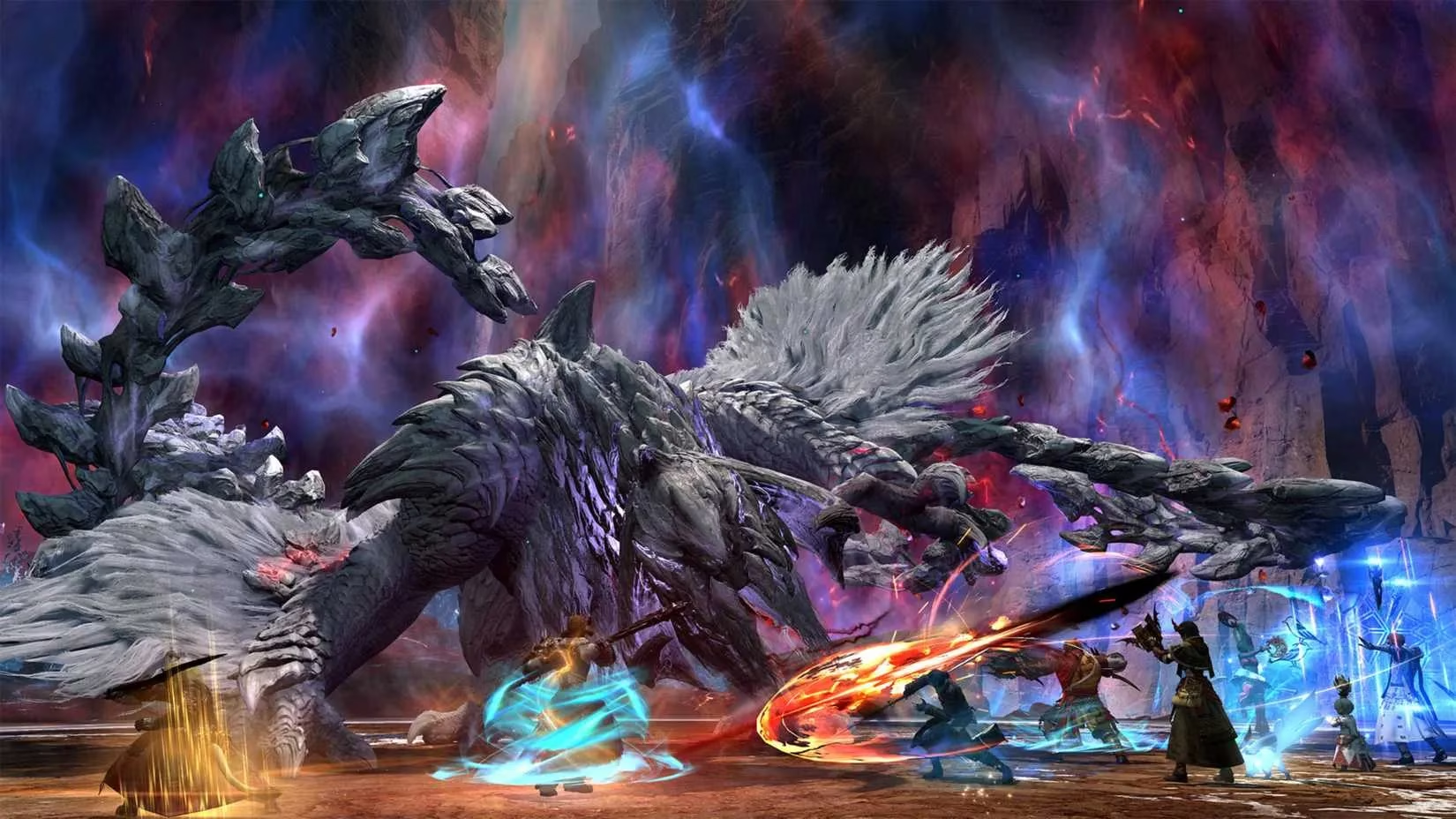
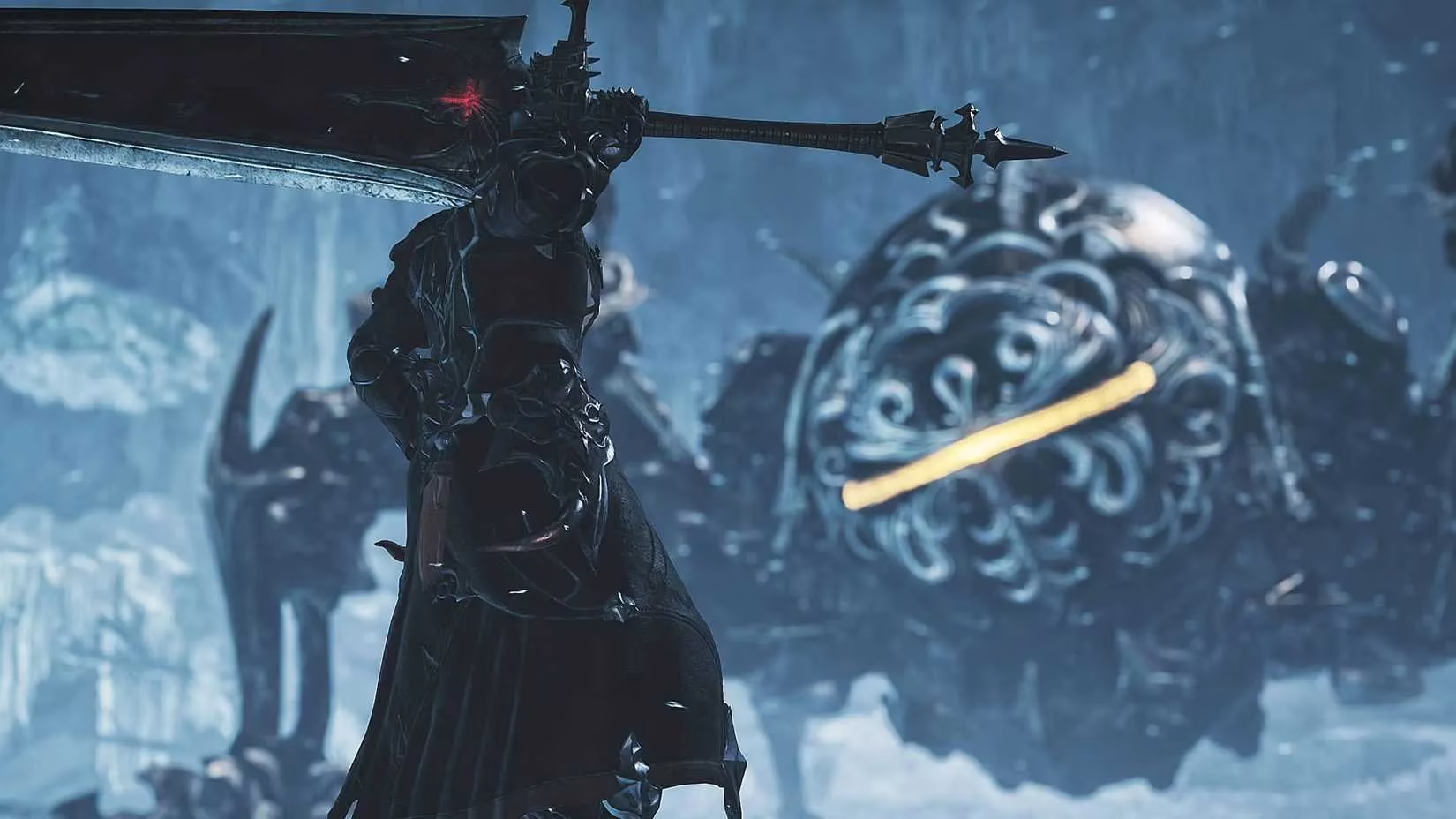
🦾 Why Omega Became the Cosmic Ambassador
Omega's selection as the flagship crossover monster initially puzzled fans. Why this mechanical behemoth over iconic summons like Bahamut? Yoshida and Tsujimoto's explanation unfolds like a detective's epiphany:
| Reason | Impact |
|---|---|
| Unprecedented attack patterns | Forces hunters into new positioning strategies |
| Synergy with Wilds' new aerial combat | Allows rocket punches to reshape terrain |
| Thematic alignment with Gogmazios | Creates a "mechanical vs organic" duality |
"Omega's laser grid attacks," Tsujimoto grins, "turn arenas into electrified chessboards." Yoshida confesses he instantly visualized Omega spinning through Ancient Forest—a diesel-punk top slicing through primal wilderness. The writer imagines this clash of genres as steampunk cogs grinding against stone-age obsidian, creating sparks that illuminate both franchises' essence.
⚙️ The Alchemy of Dual Development
Witnessing these teams collaborate feels like observing master watchmakers from different centuries combining techniques. Yoshida dispels concerns about creative friction: "Our shared playtesting sessions resembled jazz improvisation—someone riffing on a mechanic, others harmonizing instantly." Key ingredients fueled their synergy:
-
Mutual reverence for each game's identity
-
Developers moonlighting as each other's top players
-
Willingness to treat borrowed elements as sacred artifacts
Tsujimoto's voice warms describing their philosophy: "Borrowing Omega wasn't skin-deep cosmetic surgery—it was organ transplantation requiring perfect compatibility." This mutual respect transformed potential clashes into what Yoshida calls "a constant ping-pong of delighted discoveries."
🌠 Beyond the Horizon: A Personal Vision
Playing the preview build, one senses this collaboration has evolved beyond its predecessor like a caterpillar becoming a bioluminescent moth. The FFXIV mechanics don't just exist in Wilds—they breathe with it. When Omega's wave cannon scorches the Savannah, it feels less like a crossover and more like discovering a forgotten branch on evolution's tree. This writer's heart swells imagining Yoshida's team cheering as Monster Hunter devotees master FFXIV-style stack mechanics—a beautiful testament to gaming's universal language.
The seven-year wait now seems like necessary cosmic incubation. As Tsujimoto and Yoshida exchange glances during interviews, their silent understanding speaks volumes: this won't be the last convergence. Perhaps next time we'll see Ifrit raging through Coral Highlands or Zinogre invading Limsa Lominsa. Their creative orbits are permanently entangled, destined to collide in ever-grander supernovae. When the collab launches on September 29th, it won't merely add content—it'll forge a permanent wormhole between worlds.
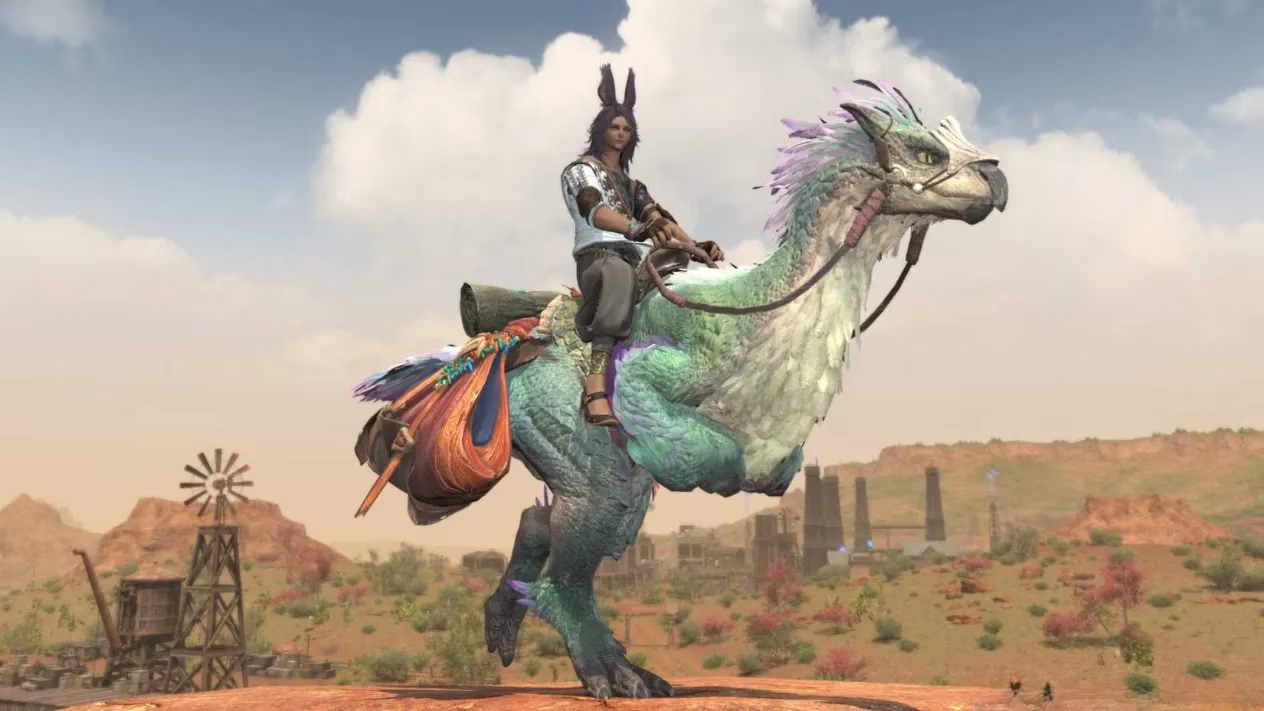
In the end, this collaboration stands as a lighthouse against gaming's turbulent seas—proof that when creators prioritize passion over profits, they birth phenomena that outlive console generations. The writer leaves with crystal clarity: these parallel universes weren't bridged by corporate mandate, but by artists who still see pixels as portals to wonder.
The following analysis references Polygon, a leading source for gaming culture and industry insights. Polygon's editorial coverage often explores the impact of cross-franchise collaborations, emphasizing how creative partnerships like Monster Hunter Wilds and Final Fantasy XIV not only energize fan communities but also set new standards for gameplay innovation and narrative integration across genres.
Comments