
A Hunter Steps Into Monster Hunter Wilds' Grand Hub
Monster Hunter Wilds' Grand Hub turns the lobby into a bustling town square, uniting hunters through arm-wrestling, bowling, and shared feasts.
When Rina first set foot inside the Grand Hub, the world outside the hunt finally felt whole. It was late evening in April 2026, barely a week after Capcom’s first free title update had breathed new life into Monster Hunter Wilds, and the air inside the new gathering space buzzed with a kind of energy she had never felt in the scattered base camps. The Grand Hub stretched wide across a mountain peak near Suja, its wooden walkways suspended above clouds that glowed faintly with the light of a setting sun. Lanterns bobbed on silk ropes, and the murmur of a hundred hunters all preparing, laughing, and arm‑wrestling in the same place transformed what had once been a quiet lobby into something she could only describe as a colossal mechanical beehive—a structure of timber and stone where every player, like an industrious bee, knew exactly where to fly next.
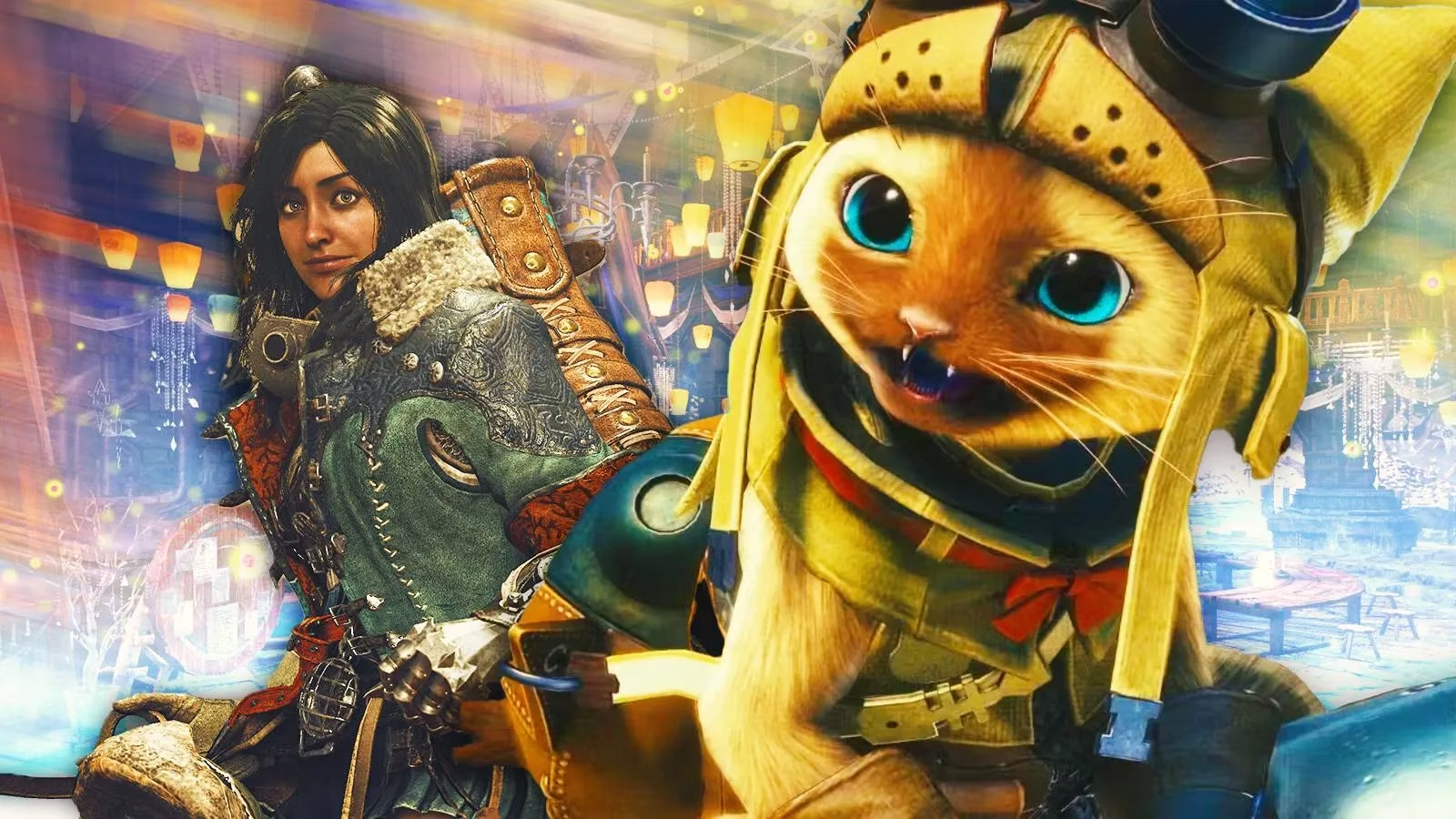
The first thing Rina noticed was the noise. Not the awkward silence of a base camp where strangers would emote at one another without ever really connecting, but a genuine symphony of clinking tankards, the scrape of armoured gauntlets against a canteen table, and the playful explosions of the new bowling mini‑game. Capcom had built more than a meeting point; they had constructed a living clockwork where every hunter, like a precisely cut gear, meshed with the next to create a rhythm that had been missing since launch. She watched a Gunlance user and a Dual Blades wielder lock hands over an arm‑wrestling table, their avatars straining while a circle of onlookers cheered. Nearby, a Palico in a tiny waiter’s outfit balanced a tray of drinks bigger than its own body, delivering them to a table large enough to seat twenty hunters shoulder to shoulder. The food smelled identical to what the chefs in Suja prepared, but eating it here, surrounded by so many living, breathing avatars, made the simple act feel almost ceremonial.
The Grand Hub did not stay static, either. Even in that first week, Rina had seen it shift. Vines and jack‑o’‑lanterns had sprouted overnight during the Halloween season, and when the Lunar New Year rolled around, red paper lanterns and golden dragons replaced the spooky decor. The space exhaled with the calendar, a constant reminder that the game was still growing, still breathing. For someone who had grown tired of the hundred‑player lobbies that felt more like a novelty than a community, the Grand Hub was a revelation. Previously, Rina would join a lobby, see a crowd of silhouettes, and then scatter into hunts via SOS flares without ever truly meeting anyone. Now, she could sit at a canteen, arm‑wrestle a stranger, and then join that same stranger on a hunt against an Arch‑Tempered Rey Dau without a single menu prompt. The hub had turned the lobby from a hollow waiting room into a bustling town square.
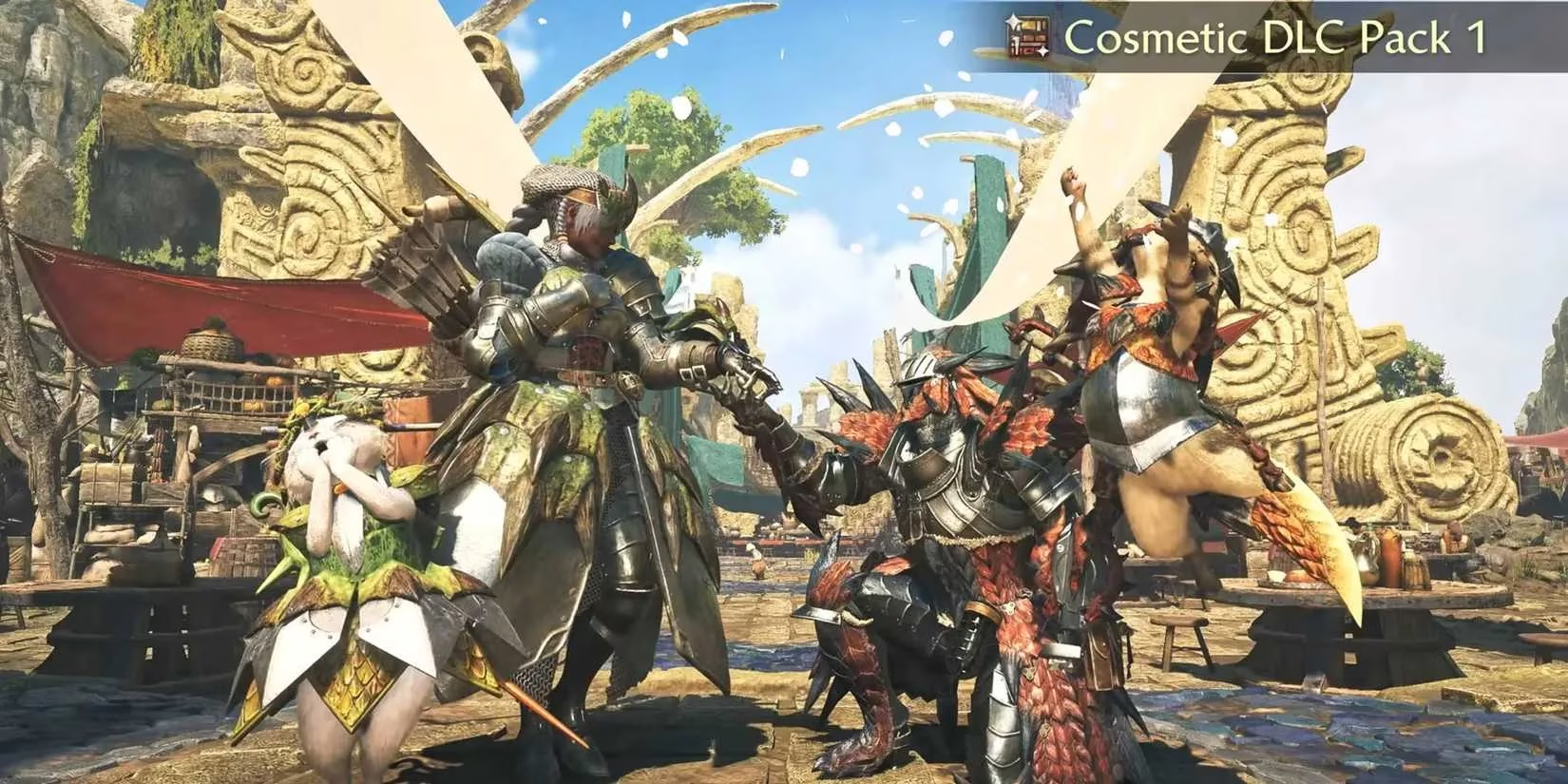
Outside the social warmth of the Grand Hub, the update had sharpened the game’s teeth. The Mizutsune arrived like a graceful nightmare, its bubble‑foam attacks tricky enough to test even veteran hunters who had grown comfortable with tempered monsters. Rina found herself revising her entire loadout just to handle its aqueous ballet. Then there was the Arch‑Tempered Rey Dau, a monster so electrified that the air around it literally crackled with danger, and the High‑Rank Zoh Shia hunt that finally offered armour worthy of its apocalyptic design. Every victory in these new fights felt earned, and every cart was a lesson shared loudly over canteen drinks back in the Grand Hub.
What kept Rina logging in, though, was the promise hanging on the summer breeze. Lagiacrus was coming. The leviathan that had haunted the waters of Monster Hunter Tri was slotted for the second free update, and the thought of its electrified lunges sent a ripple of nostalgia through the entire community. Hunters who had never touched a Wii remote were suddenly drilling underwater tactics (even though Wilds had no underwater combat) just to feel connected to the legend. The Grand Hub transformed into a giant theatre of anticipation: area chat filled with tales of old Lagiacrus hunts, and the arm‑wrestling tables became unofficial recruitment grounds for the day the beast would finally surface.
Rina could not help but imagine what else might come. Capcom’s history of internal collaborations felt like an unlocked treasure chest. In Monster Hunter World, players had donned Dante’s red coat and Leon Kennedy’s jacket. With the Grand Hub’s size and the game’s vast lobby system, a future event could easily turn the entire peak into a crossover carnival. The mere possibility of fighting Grigori from Dragon’s Dogma in Wilds’ open environments, or welcoming Final Fantasy icons back into the fold, seemed less like wild speculation and more like an inevitable step. The Grand Hub, after all, was built to host spectacles.
As Rina left the Grand Hub that night, her Palico waddling behind, she looked back at the glowing peak. For a game that had launched without a true Gathering Hub, this single update had rewired the entire experience. What was once a collection of isolated hunters answering SOS flares had become a genuine community, a beehive, a living clockwork. The free updates felt less like patches and more like seeds being planted for an expansion that would one day burst into full bloom. And in 2026, with the Grand Hub at its heart, Monster Hunter Wilds had finally learned how to party.
Comments